
What Koreans Eat in a Typical Day
A Realistic Look at Everyday Korean Meals, From Morning to Night
First Things First: Korean Food Isn’t Just Kimchi
When people think of Korean food, they often imagine spicy dishes, endless side dishes, and sizzling barbecue. While that’s not wrong, it’s also not the full picture.
What Koreans eat in a typical day is usually simpler, more practical, and less dramatic than what you see on social media. Daily meals are about balance, familiarity, and fitting food into busy schedules.
So let me walk you through what an average day of eating looks like for many Koreans.
Breakfast: Simple, Light, or Sometimes Skipped
Traditionally, Korean breakfast looked very similar to lunch or dinner: rice, soup, and a few side dishes. Older generations still eat this way, especially at home.
But modern life has changed breakfast habits a lot.
Many Koreans today choose:
- Rice and soup if eating at home
- Toast, eggs, or cereal
- Yogurt, fruit, or a quick snack
- Coffee only, especially on busy mornings
Breakfast is often the smallest meal of the day, and for some people, it’s skipped entirely. The focus is convenience rather than variety.
Lunch: The Most Important Meal of the Day
Lunch is where Korean food culture really shows itself.
For students and office workers, lunch is usually eaten outside — at cafeterias, small restaurants, or convenience stores. Meals are filling, balanced, and designed to keep you going through the rest of the day.
A typical Korean lunch might include:
- Rice
- Soup or stew
- A main dish like meat, fish, or tofu
- A few side dishes
Popular lunch options also include noodle dishes, rice bowls, or quick meals like kimbap. The key point is that lunch is warm, satisfying, and eaten fairly quickly.
Convenience Store Meals Are Part of Daily Life
One thing that surprises many foreigners is how common convenience store meals are in Korea.
For busy days, people often grab:
- Packed rice meals
- Kimbap
- Sandwiches
- Instant noodles
- Ready-made side dishes
These aren’t considered unhealthy or lazy choices. Convenience stores are clean, reliable, and part of everyday food culture, especially for students and people living alone.
Dinner: From Quick Meals to Social Gatherings
Dinner depends a lot on lifestyle.
On regular weekdays, dinner might be simple:
- Leftover lunch-style meals
- Home-cooked rice and soup
- A quick noodle dish
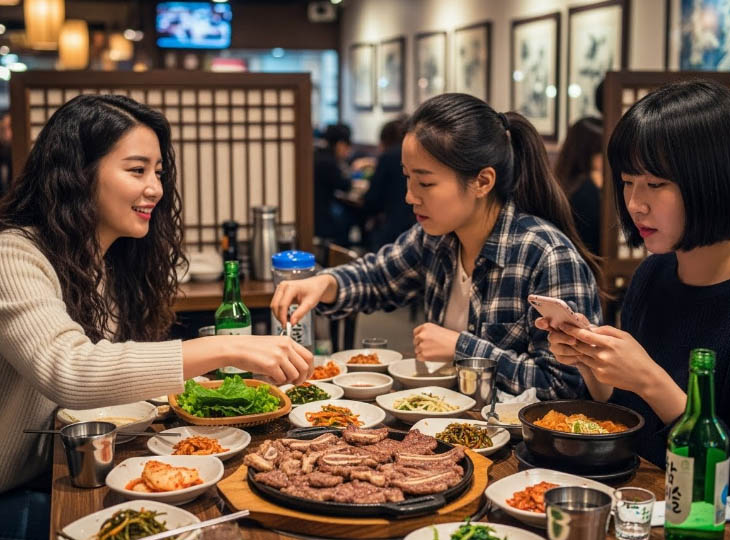
But dinner is also when social eating happens.
Eating out with friends, coworkers, or family is extremely common. This is when dishes like Korean barbecue, fried chicken, hot pot, or spicy stews appear. These meals are slower, louder, and more social.
So while daytime meals are efficient, dinner often becomes the emotional center of the day.
Snacks and Coffee: The Hidden Meals
Koreans snack more than they realize.
Between meals, people often have:
- Coffee (sometimes multiple cups a day)
- Bread or pastries
- Sweet snacks
- Convenience store ice cream or drinks
Coffee culture is especially strong. Many people treat coffee as a daily ritual rather than just a drink.
Do Koreans Eat Spicy Food All the Time?
Not really.
Spicy food exists, but everyday meals are often mild. The idea that all Korean food is extremely spicy is a stereotype. Daily meals focus more on comfort and balance than heat.
A Local Korean’s Honest Perspective
What I eat in a day changes depending on work, mood, and schedule — and that’s true for most Koreans.
Some days are full of home-style meals.
Some days are convenience store days.
Some days are coffee and bread days.
And some nights turn into long dinners with friends.
There is no single “perfect” Korean daily diet — just a rhythm that balances tradition with modern life.
What This Tells You About Korean Culture
Daily Korean meals reflect Korean life:
- Practical
- Fast-moving
- Social when it matters
- Flexible and realistic
Food isn’t always an event. Sometimes it’s fuel. Sometimes it’s comfort. Sometimes it’s connection.
Understanding what Koreans eat in a typical day helps you understand how Koreans actually live — not just how they eat on special occasions.
Final Thoughts
If you’re curious about Korean food, don’t only look at famous dishes.
Look at everyday meals.
Look at lunch menus.
Look at convenience stores.
Look at how people eat during busy days.
That’s where real Korean food culture lives.
And once you see it, Korean daily meals feel less exotic — and much more human.