
When Is the Best Time of Year to Visit South Korea?
A Local Korean Woman’s Guide to Seasonal Travel
South Korea is a relatively small country, but it feels like four worlds in one because the seasons here are vibrant and distinct. From dreamy cherry blossoms to fiery autumn leaves, from snowy mountains to summer beach festivals, there really is no “bad” time to visit — just the right time for the experience you want.
I live in Korea and have traveled around the country through all seasons. In this guide, I’ll walk you through the best time to visit Korea based on weather, cultural experiences, natural beauty, and local festivals — so you can plan a trip that feels genuinely unforgettable.
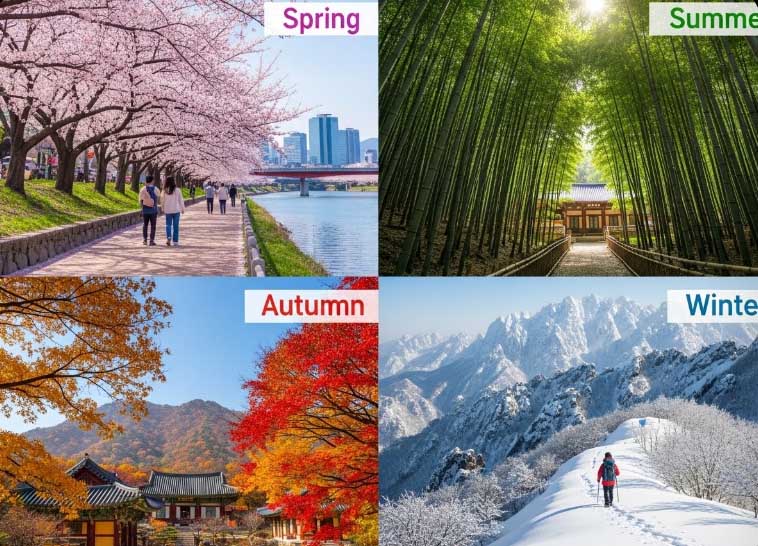
Spring (Late March to Early May): Korea’s Most Popular Travel Season
If someone asks locals when they think Korea is at its most beautiful, most will say spring. And with good reason.
Why Spring Is Special
- Cherry blossoms bloom from late March to mid-April depending on the region
- Warm temperatures and gentle breezes
- Outdoor festivals, flower walks, and scenic parks
Spring in Korea feels like a burst of optimism. The entire country seems to put on its best face: cherry blossoms in Seoul’s Yeouido Park, pink petals along river paths in Busan, and tranquil gardens in Gyeongju.
You’ll see locals and tourists alike gathering for picnics under blossom trees, taking photos, and celebrating the season. If you love flowers, soft sunshine, and comfortable weather, spring is the most magical time to visit.
Summer (June to August): Beach Days and Watermelon Nights
Summer in Korea can be hot and humid, with temperatures often climbing into the high 80s and 90s Fahrenheit. But for many travelers, summer is full of vibrant energy.
What Summer Offers
- Busan and Jeju beaches at peak season
- Outdoor concerts and music festivals
- Water sports, fireworks, and night markets
One drawback is monsoon season, usually in late June to mid-July. Expect a few days of rain, but don’t let that scare you — the rain often clears quickly, and summer festivals pick up everywhere.
If you love the beach, seafood, festivals, or fruity cold treats (think shaved ice and watermelon), summer is exciting and joyful — especially for families and young travelers.
Autumn (September to November): Korea’s Golden Season
For many Koreans and frequent visitors, fall is the best season of all.
Why Autumn Is a Favorite
- Mild temperatures and clear blue skies
- Spectacular autumn foliage in mountains and forests
- Traditional harvest festivals and cultural events
From late October to early November, the hills and valleys transform into vibrant reds, oranges, and golds. Places like Seoraksan National Park, Nami Island, and Andong Hahoe Village become stunning natural galleries.
Additionally, autumn is festival season: traditional music, temple stays, cultural performances, and even grape or apple harvest celebrations. It’s picturesque and perfect for outdoor exploration without the heat and humidity of summer.
Winter (December to February): Snow, Ice Fishing, and Cozy Cafes
Winter in Korea is cold — sometimes very cold — but it’s also uniquely charming.
Winter Experiences You Can’t Miss
- Ski resorts near Seoul and Pyeongchang
- Ice fishing festivals on frozen lakes
- Festive lights and Christmas markets
- Hot springs and heated floors everywhere
Snow blankets the landscape in the mountainous regions and northern cities, making winter ideal for ski lovers and cozy travelers. Even in Seoul, winter brings a romantic aura: streets lit with lights, warm cafes on every corner, and hot chocolate that feels like an essential travel fuel.
If you adore snowy scenery, winter sports, and cultural traditions tied to the lunar new year, then Korea in winter is a delightful adventure.
Should You Time Your Trip Around Korean Holidays?
There are two major holiday seasons that affect travel plans:
Lunar New Year (Seollal)
- Usually late January or early February
- A major family holiday in Korea
- Many shops and services close for a few days
This is a culturally rich time to experience Korea but not ideal for first-time travelers who want easy access everywhere.
Chuseok (Korean Thanksgiving)
– Typically in September or October
– Another major national holiday
– Trains and flights sell out quickly
During both Seollal and Chuseok, locals travel home to their families, so transportation can be crowded and accommodations book early. If you enjoy traditional culture and don’t mind planning ahead, these times offer deep cultural immersion, just be ready for busy travel logistics.
So, When Is the Best Time to Visit?
It really depends on what you want to experience:
- For scenic beauty and gentle weather: Spring or Autumn
- For beaches, night markets, and festivals: Summer
- For snow, winter sports, and cozy vibes: Winter
- For authentic cultural immersion: Seollal or Chuseok with careful planning
If I had to pick one season that most travelers fall in love with — it’s autumn. Cool days, warm afternoons, and color everywhere create what many locals call Korea’s golden season.
Local Tips for Travelers
- Book early for fall and spring travel — these seasons are popular.
- Carry layers — Korea’s weather can shift quickly, especially in spring and autumn.
- Explore beyond Seoul — Busan beaches, Jeju Island’s volcanic landscape, Gyeongju’s historic charm, and mountain trails are all well worth your time.
- Try seasonal food — cherry blossom desserts in spring, summer cold noodles, autumn chestnuts, and winter hot tteokbokki!