
Why Koreans Are So Exceptionally Polite
You’ve arrived in Seoul, and almost immediately, you notice it: the frequent bowing, the careful use of titles, the two-handed exchange of everything from business cards to coffee cups. Korean society operates with a level of ingrained politeness and formality that can feel wonderfully unique to foreigners.
But why the intense focus on etiquette? Is it just traditional manners, or is there a deeper, complex system at work?
As a local, I can tell you that Korean politeness is a subtle but powerful form of social glue, rooted in history and crucial for navigating a hyper-connected, high-density society. It’s an operating system that prioritizes harmony and respect above all else.
Pillar 1: Hierarchy and Respect
The structure of politeness is fundamentally rooted in the Confucian traditions that emphasize respect for age, rank, and social position.
1. Mastering the Titles and Honorifics (Jondaemal)
The Rule: You rarely speak the same way to everyone. Language itself is a politeness tool. You must use Jondaemal (존댓말)—formal, honorific speech—when addressing elders, superiors (your boss or manager), or anyone you don’t know well.
The Why: This language system automatically acknowledges the social order. It’s the most powerful non-verbal way to show that you recognize and respect the other person’s status or seniority.
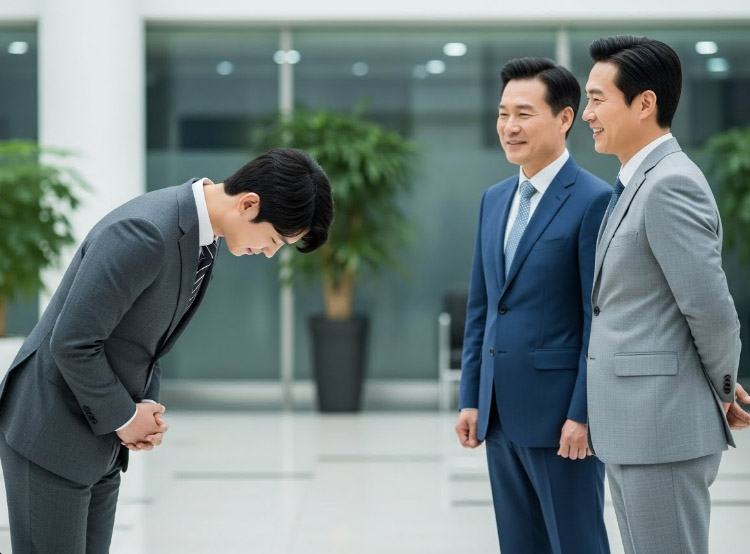
2. The Universal Bow
The bow is the most visible sign of respect. It’s used instead of a handshake or hug in many formal situations.
The Why: The depth and duration of the bow signal the level of respect and formality required by the situation. It’s a clean, non-intrusive way to greet or show gratitude while maintaining social boundaries.
Pillar 2: Harmony and Community (The Social Glue)
In a high-density, collective culture, politeness is essential for peaceful co-existence.
3. Preserving Public Harmony (Hosu and Nunchi)
Koreans place a high value on Hosu (호수), or public harmony. Disrupting the social environment is seen as rude and selfish.
The Action: This is why Koreans are quiet on the subway, avoid loud arguments in public, and generally adhere strictly to public queuing rules.
The Why: Politeness ensures that millions of people can live in close proximity without excessive friction. It’s a system of community survival.
4. The Two-Handed Ritual (Sincerity)
When exchanging goods (money, business cards, glasses during a drink), the two-handed gesture is mandatory for showing respect to seniors.
The Why: It signifies that you are dedicating your full attention and sincerity to the transaction. Using one hand is viewed as lazy or dismissive.
Pillar 3: The External Display
Politeness is crucial for maintaining public dignity and reputation.
5. Maintaining “Face” (Che-myon)
Politeness ensures that neither party loses Che-myon (체면), or public face/honor. You avoid direct confrontation, criticism, or embarrassing someone in public because it disrupts their dignity.
The Result: This preference for indirectness is a polite avoidance of potential conflict. The downside is that it sometimes means avoiding difficult truths, but the upside is that social interactions remain pleasant and respectful.
Korean politeness isn’t just a set of stiff rules—it’s a beautiful, complex cultural toolkit designed to manage hierarchy, ensure social harmony, and display sincere respect in every interaction. Embrace the bow!