
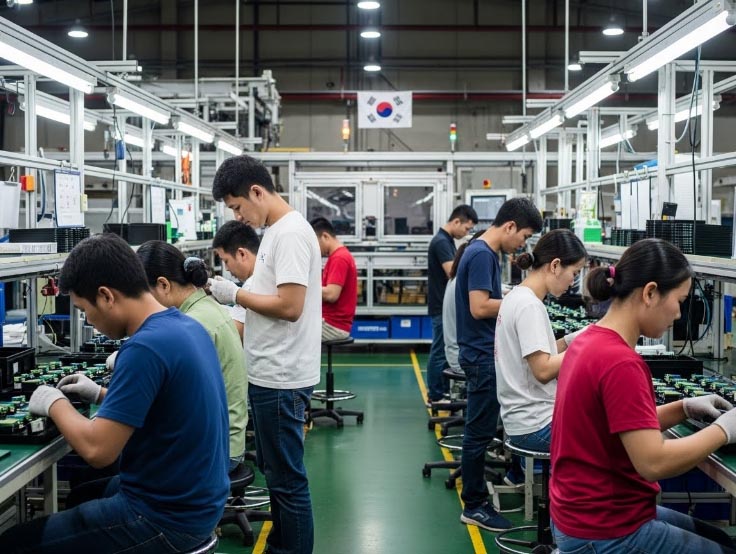
Why Foreigners Choose Factory Jobs Over Office Jobs in Korea
When people think about working abroad, they might imagine office cubicles, team meetings, or corporate titles. But in Korea, a significant number of foreigners — especially those starting out — choose factory jobs over office jobs. As someone living here, I’ve watched this trend firsthand, and it’s not just random: there are clear, practical reasons behind it.
From financial incentives to easier entry requirements, many foreigners find that factory jobs offer real opportunities, especially when compared to office work in Korea’s competitive job market.
1. Factory Jobs Are Often Easier to Enter
One of the biggest reasons foreigners choose factory roles is accessibility. Office jobs in Korea usually require:
- Higher Korean language proficiency
- Local degree or job experience
- Familiarity with Korean business culture
Many foreigners simply don’t meet those criteria when they first arrive. Factory jobs, by contrast, often require:
- Basic communication skills
- A valid work visa
- Willingness to learn on the job
For many international workers, especially those with limited Korean ability or no experience in Korean corporate settings, factories provide a practical entry point into the workforce.
2. Visa Support Is More Straightforward
Another big factor is visas. Many factory jobs sponsor E-9 (Non-Professional Employment) visas, which are specifically designed to bring in foreign labor for manufacturing, construction, and similar roles. These visas are often easier to secure than visas tied to professional office work, which can demand higher education and specialized skills.
For someone outside Korea wondering, “How do I even get a work visa?”, factory opportunities feel far more reachable than office positions.
3. Predictable Schedules and Duties
Factory jobs often come with clear, predictable routines, and that’s reassuring for many foreigners who prefer stability over ambiguity. Office jobs can involve:
- Long meetings
- Unpredictable workloads
- High expectations for networking and socializing after hours
Factory roles, particularly in manufacturing, tend to revolve around structured shifts and clearly outlined daily duties. For many people living far from home, that structure offers psychological comfort and straightforward expectations.
4. Competitive Pay with Overtime Bonuses
Working in a Korean factory isn’t always glamorous, but one of the biggest perks is overtime pay. In Korea:
- Overtime is legally compensated
- Weekend work often earns higher rates
- Shift differentials can boost monthly earnings
For workers who want to maximize income, factory jobs can sometimes pay better than entry-level office roles — especially when overtime and bonuses are factored in. Many foreigners choose factories specifically because they can earn more in a shorter period.
5. Less Pressure Around Korean Language
Let’s get honest: Korean is a challenging language. Office jobs often expect fluency in both conversation and business writing. Factory jobs typically prioritize safety communication and task instructions — which means basic Korean skills or even English plus gestures can be enough to start.
This lower language barrier makes manufacturing jobs less intimidating and more approachable for newcomers.
6. Community and Camaraderie Among Workers
Working in a factory often means being part of a team that shares breaks, training, and work rhythms. Many foreigners talk about how quickly they build friendships in these settings — often faster than in isolated office environments where hierarchical culture separates newcomers from senior staff.
For many, this sense of community is not just a perk but a source of emotional support in a foreign country.
7. Lower Education Requirements, More Practical Skills
Office positions usually emphasize academic credentials — bachelor’s or master’s degrees, experience in specific industries, or expertise in technical tools. Manufacturing jobs often care more about:
- Reliability
- Work ethic
- Willingness to learn practical skills
For someone without a local degree or corporate background, this means job opportunities are more merit-based than credential-based.
8. A Stepping Stone to Other Opportunities
Many foreigners view factory work not as a dead end but as a stepping stone. Working in manufacturing lets you:
- Build a local employment history
- Improve Korean language skills
- Network with other workers
- Learn Korean work culture
These experiences can later support moves into office roles, specialized technical positions, or even business ventures.
9. Work–Life Balance That Fits Some Lifestyles
In Korea, office jobs are often associated with late nights, after-work gatherings, and performance pressure. For many foreigners, especially those focused on savings, travel, or family goals, the factory schedule — even with shifts — feels more compatible with personal life and budgeting.
This is not to say factory work is easy, but its rhythm can suit people who value predictability and clear boundaries.
10. Real Voices: Foreign Workers on Why They Chose Factories
When I talk to foreigners working in factories, several themes come up:
- “It was the first job I could qualify for here.”
- “I wanted something where effort equals earnings.”
- “The schedule is predictable.”
- “I didn’t have to be perfect in Korean to start.”
These honest reflections show that the choice isn’t random — it’s based on real priorities like earning potential, language comfort, and stability.
Conclusion: Practical Choices, Positive Outcomes
So why do so many foreigners choose factory jobs over office careers in Korea? The answer is rooted in accessibility, financial logic, language practicality, and workplace culture. For newcomers, especially those without advanced Korean skills or corporate experience, manufacturing work offers a realistic and rewarding path.
Factory roles are not a lesser option — they are often a strategic choice that leads to financial stability, community support, and long-term possibilities.