
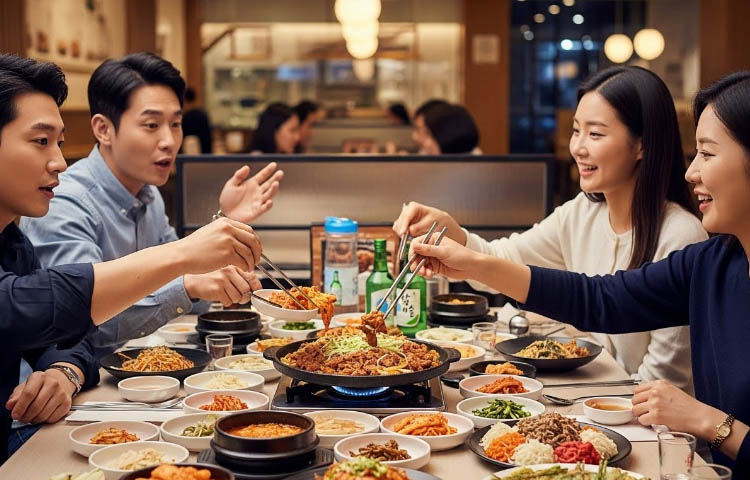
Why Koreans Eat So Fast: The Culture Behind It
One of the First Things Foreigners Notice
If you’ve ever eaten with Koreans, you may have noticed something surprising:
the food disappears fast.
Sometimes very fast.
Many foreigners ask the same question — Are Koreans always in a hurry when they eat?
The short answer is yes… but not for the reasons you might think.
Eating quickly in Korea isn’t about bad manners or impatience. It’s connected to how Koreans see time, food, and daily life.
The “Ppalli-Ppalli” Way of Living
At the heart of this habit is a Korean expression you’ll hear often: ppalli-ppalli, meaning “quickly, quickly.”
This phrase describes more than speed. It reflects a cultural value placed on efficiency, momentum, and flow. Koreans are used to moving through the day with purpose — walking fast, working fast, and yes, eating fast.
Meals are part of life’s rhythm, not a pause from it.
Why Eating Fast Feels Normal in Korea
In many Western cultures, meals are long, relaxed events. In Korea, meals are usually practical and satisfying, especially on busy weekdays.
Several cultural factors shape this habit:
Meals Fit into Busy Schedules
School, work, commuting, and social obligations often fill the day. Meals are important, but they are expected to be efficient so life can continue smoothly.
Everything Is Served at Once
Korean meals arrive all together — rice, soup, main dishes, and side dishes at the same time. There’s no waiting for courses, so eating begins immediately and moves steadily.
Food Is Best at the Right Moment
Many Korean dishes are meant to be eaten hot and fresh. Waiting too long actually lowers the quality of the meal, so eating promptly makes sense.
Eating Fast Doesn’t Mean Not Enjoying Food
This is where many people misunderstand Korean dining culture.
Koreans love food deeply.
They talk about food constantly.
They travel for food.
They plan their day around meals.
Eating quickly doesn’t mean eating without appreciation. It means enjoying food while it’s at its best, without unnecessary delay.
You’ll often see Koreans eat quickly — then sit and talk for a long time afterward.
The Social Side of Fast Eating
Korean meals are often shared. Dishes sit in the center, and everyone eats together. When one person eats very slowly, it can feel awkward — not rude, just out of sync.
Eating at a similar pace helps keep the group comfortable.
It’s less about speed and more about harmony.
Is This Always the Case?
Not at all.
Special meals are different. Family gatherings, celebrations, long nights with friends — these meals can last for hours. Alcohol, conversation, laughter, and storytelling naturally slow everything down.
Koreans know how to slow down when the moment calls for it.
The difference is intention:
- A weekday lunch is efficient.
- A meaningful gathering is unhurried.
How Foreigners Usually React
At first, many visitors feel surprised or even rushed.
Then something interesting happens.
After a few weeks, many start eating faster too — without realizing it. They adapt to the rhythm, enjoy the efficiency, and find it oddly satisfying.
It’s one of those cultural habits that quietly grows on you.
A Local Korean’s Honest Perspective
Growing up in Korea, I never thought about how fast we eat — until foreigners pointed it out.
Now I see it clearly.
We eat fast not because we don’t care, but because we do.
We care about time.
We care about others waiting.
We care about food being enjoyed properly.
And once the meal is done, we stay. We talk. We connect.
The speed of eating doesn’t define the warmth of the experience.
What This Says About Korean Culture
Korean eating habits reflect Korean life as a whole:
- Fast-moving
- Highly efficient
- Deeply social
- Strongly food-centered
Understanding why Koreans eat fast gives you insight into how Koreans live, work, and relate to each other.
It’s not just about food — it’s about mindset.
Final Thoughts
So why do Koreans eat so fast?
Because life moves fast.
Because food is meant to be enjoyed at the right moment.
Because efficiency and consideration are cultural values.
Once you understand that, Korean dining culture starts to make a lot more sense — and maybe even feels a little comfortable.
You don’t have to eat fast to enjoy Korean food.
But understanding why others do will help you enjoy Korea itself a little more.