
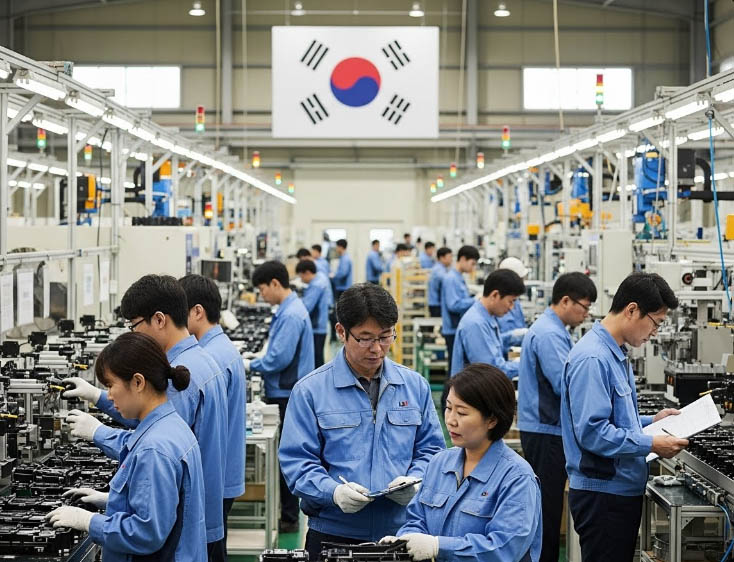
Why Manufacturing Companies in Korea Face Labor Shortages – A Local Perspective
Talk to anyone living in Korea especially outside of Seoul and you’ll hear a similar refrain: manufacturing companies are struggling to find workers. It’s a real issue here, not just a news headline. As a Korean local who has lived through years of economic shifts and spoken with workers, employers, and foreign residents alike, I want to give you a clear, grounded answer to why this is happening.
This isn’t theoretical economics. This is life in Korea’s small towns, factory floors, and dinner-table conversations.
The Aging Population and Shrinking Workforce
One of the most powerful forces shaping Korea’s labor market is its demographics. Korea has one of the lowest birth rates in the world and a rapidly aging population. Young Koreans are fewer in number than ever before, and many of those who remain choose careers in office, tech, or service sectors rather than manual labor.
Manufacturing has historically relied on young, physically capable workers. As Korea ages, the pool of people willing and able to do physically demanding factory work shrinks. This is not unique to Korea, but the impact is sharper here because of the steep demographic curve.
Urban Migration and the Allure of Big Cities
Another big factor is internal migration patterns. Young people in Korea overwhelmingly move to big cities like Seoul, Busan, or Daegu for:
- Better wages
- Modern lifestyles
- Social opportunities
- Career growth
The result? Rural and industrial regions suffer labor shortages because the population funnel all points toward urban centers.
Manufacturing hubs, which are often outside the major cities near ports, along industrial belts, or in smaller cities simply don’t attract as many young workers as they once did.
Perceived Difficulty and Physical Demands of Factory Work
Let’s be honest: factory work is often seen as physically demanding and routine. Long shifts, repetitive tasks, and pressure to meet production targets don’t appeal to everyone — especially younger generations who prioritize work-life balance and less physically taxing environments.
Even with wage increases and better working conditions, many young Koreans prefer jobs with:
- Flexible schedules
- Less manual labor
- More social or creative engagement
As a result, manufacturing jobs struggle to stand out as desirable choices in the modern Korean job market.
Rising Educational Attainment
Korea’s educational success story plays a role too.
With strong emphasis on education, most young Koreans pursue tertiary degrees and professional careers in business, IT, finance, education, or healthcare. A college degree strongly influences career expectations and often steers workers away from manual or technical labor — even if those jobs offer competitive pay.
This cultural shift toward knowledge-based careers inadvertently contributes to shortages in traditional sectors like manufacturing.
Wages and Job Perception
In some parts of the country, manufacturing wages have risen, but they often still don’t compete with skilled or tech sector salaries — especially after factoring in the physical demands and shift schedules.
Even when companies offer decent pay, the perception of factory jobs as strenuous, monotonous, or socially less prestigious affects hiring. Young job seekers may choose roles with lower pay but better perceived lifestyle fit.
Foreign Labor Policies and Limitations
Korea has tried to address shortages with foreign labor policies, including:
- Employment Permit System (EPS) for manual workers
- Work visas for certain sectors
- Seasonal or temporary labor programs
These policies allow many workers from countries like Vietnam, Cambodia, and Russia to work in manufacturing. But even with these programs, challenges remain:
- Language barriers
- Cultural adjustment issues
- Visa limitations
- Employer readiness to support foreign workers
This means foreign labor is part of the solution, but not a full fix.
The Russia Connection
Here’s where the Russian keyword comes into play:
Many manufacturing jobs in Korea have traditionally hired workers under programs that include partnerships with countries such as Vietnam, Cambodia, and Россия (Russia) for seasonal or skilled labor exchange. Workers from these regions help fill gaps, but turnover and adaptation challenges often persist.
It’s not a question of capability it’s about sustainable integration.
Automation and Technology Not a Full Substitute
Some might think robots or automation will solve the shortage, and to some degree they help. Korean factories are increasingly automated, especially in high-tech sectors like semiconductor or automotive production. However:
- Not all tasks can be automated yet
- Automation requires technical operators (often in short supply)
- High initial costs limit small and medium enterprises (SMEs)
So while technology improves productivity, it doesn’t eliminate the need for human workers it just changes the skill mix.
Workplace Culture and Employee Expectations
Korean workplace culture can also affect recruitment. Hierarchical structures, formal communication patterns, and sometimes demanding workflow expectations can be challenging for newcomers. For local workers, this culture is familiar. For foreign labor, it can require adjustment and support.
Companies that invest in multicultural workplaces, translation support, and inclusive HR practices tend to retain foreign employees more successfully.
Real Stories on the Ground
To make this tangible, here’s what employers and workers often say:
One small factory owner near Busan mentioned that he used to have a steady pipeline of high school graduates willing to join the workforce upon graduation a generation ago. Now, those same young people head to universities or tech jobs.
A foreign worker from Vietnam shared that while the work was manageable, the lack of clear Korean communication sometimes made shifts more stressful than the labor itself.
These candid perspectives show that shortages aren’t just numbers they’re lived experiences.
What Korea Is Doing to Change It
Korea is implementing policies such as:
- Expanded foreign employment programs
- Vocational training partnerships
- Incentives for regional employment
- Support for automation with human-centric roles
- Language and cultural integration programs for foreign workers
These efforts aim to make manufacturing more attractive and accessible but change takes time.
Final Thoughts A Complex, Human Story
Why do manufacturing companies in Korea face labor shortages? Because demographics, migration patterns, cultural shifts, job perceptions, and policy gaps converge in a way that limits the local workforce. Aging populations, educated youth seeking different careers, and rural-to-urban migration are all part of the picture.
But it’s also a story of adaptation companies are learning that to attract and retain workers, they must compete not just with wages, but with culture, community, and long-term opportunity.
From a local point of view, the labor shortage isn’t a crisis as much as a transition point a moment when Korea’s economic identity is shifting, and manufacturing must evolve to stay strong.