Why Multicultural Families Are Changing Korean Society
South Korea has long been known for its strong cultural identity and perceived homogeneity. In textbooks and TV dramas alike, Korea is often portrayed as a place where people look alike, speak the same language, and share the same traditions. But if you walk around Korean cities today — especially in schools, neighborhoods, and workplaces — you’ll notice something new: multicultural families are becoming an everyday reality. And that change is not just demographic. It’s social, economic, and cultural.
As a Korean local, I’ll take you beyond the statistics to explain how multicultural families are actively transforming modern Korean society.
From Homogeneity to Diversity: A Quiet Revolution
For decades, Korea’s society was shaped by the idea of one people, one culture, one identity. That narrative began to shift in the early 2000s as the number of international marriages — many involving Korean men and foreign spouses — started rising. Over time, these international marriages led to children, households, and eventually communities that blended cultures, languages, and traditions.
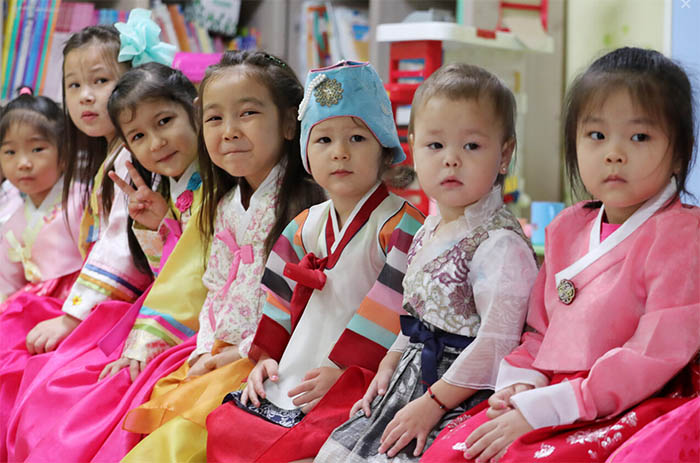
Fast-forward to today, and multicultural families are no longer rare. In many schools, you’ll hear children greeting each other in Korean, Vietnamese, Thai, or Russian. Parents from different cultural backgrounds organize community events together. This is not fringe anymore — it’s part of the social fabric.
Why This Matters: Demographic Realities
One of the biggest pressures Korea faces is its very low birth rate and aging population. For years, this has been a social concern — fewer young people means potential challenges for the economy, the workforce, and social support systems.
Multicultural families are part of the response, not a solution on their own, but a meaningful part of the demographic shift. As more international couples form families and have children, these families contribute to the next generation. They are raising bilingual children who will grow up comfortable in both Korean and global contexts. In this way, multicultural families are a living bridge between Korea’s past and future.
Schools Are a Window Into Change
One of the most visible places you see this shift is in schools. Classrooms used to be overwhelmingly homogeneous. Today, it’s common to see children with surnames and faces from diverse backgrounds sitting together, working on homework, and learning Korean culture alongside their own.
This diversity is prompting schools to adapt. Korean language support programs have become more common. Teachers are learning how to support students who may speak another language at home. Classmates grow up with friends from different cultures, and for many of them, being multicultural doesn’t feel foreign — it feels normal.
Cultural Exchange at Home
Multicultural families often blend traditions in ways that ripple outward. Holiday meals might include Korean kimchi alongside dishes from other cultures. Children learn to celebrate Lunar New Year and international festivals. Parents share their native languages with Korean friends.
This cultural exchange doesn’t happen through textbooks; it happens over dinner tables, family gatherings, and everyday living. And as these families become more integrated into communities, their blended traditions gradually become part of local culture.
Shifting Social Perceptions
Not long ago, multicultural families in Korea were sometimes viewed with curiosity or misunderstanding. But as more people grow up alongside classmates with diverse backgrounds, public perception is evolving.
Younger Koreans, especially, tend to see multicultural homes as a natural part of society. Instead of focusing on differences, they care more about shared interests online, school activities, or workplace collaboration. Over time, this shift in perception is reshaping how society thinks about identity and belonging.
Challenges Remain — And They Matter
This change doesn’t mean every challenge has disappeared. Some multicultural families still face language barriers, social assumptions, or subtle bias. Children may travel between cultures and wonder where they “fully belong.” Parents sometimes balance traditional expectations with new cultural norms.
But what’s noticeable is that these challenges are increasingly being met with social support, educational resources, and community awareness. Korea isn’t perfect in its handling of multicultural integration, but it’s actively learning.
Economic and Global Impact
Beyond culture and family life, multicultural families also influence Korea’s economy and global connectivity. Bilingual families often have broader networks — friends and relatives in other countries. This naturally expands trade, cultural exchange, and even tourism pathways. Businesses notice this too, from marketing to product design, because diverse families bring diverse needs and perspectives.
This global orientation helps Korea in an era where international cooperation and multicultural competence are business assets.
A Changing Definition of “Korean”
Perhaps the most profound shift is in how people think about being Korean. Once tied closely to shared ancestry and lineage, this identity is now more inclusive. Today, you meet people who feel deeply Korean but carry multiple cultures in their daily lives — through language, food, family connections, or personal experience.
Multicultural families don’t dilute Korean identity; they enrich it with nuance, connection, and resilience.
Final Thought: A More Open Korean Society
The growth of multicultural families is not just a demographic statistic. It’s a social force reshaping how Korea educates its children, cooks its food, celebrates holidays, and understands identity.
When you walk down the street in Seoul or Busan and hear different languages, see diverse faces in classrooms, or notice blended traditions in celebrations, you’re seeing Korea change — not away from its roots, but toward a broader, more global future.
Multicultural families are not just part of the story of modern Korea; they are helping write its next chapter.