
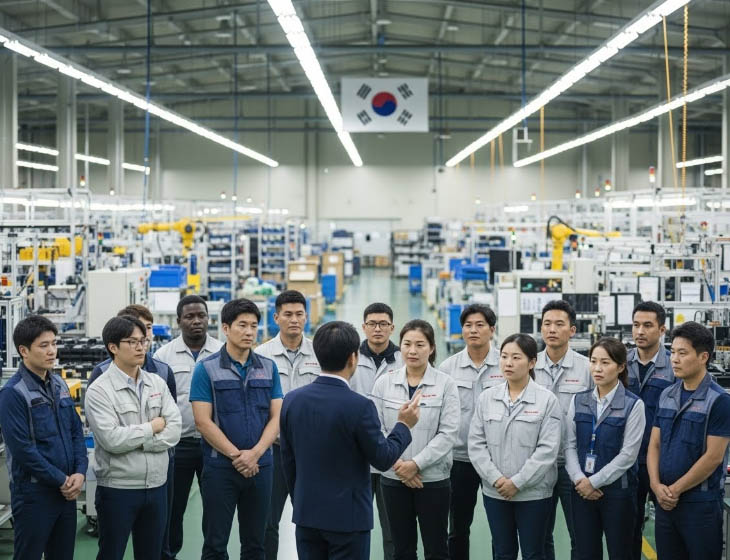
Work Culture Differences for Foreign Employees in Korea – A Local’s Perspective
If you’re thinking about working in Korea, one of the biggest adjustments isn’t the language, the technology, or the paperwork — it’s the work culture. Korean workplaces have their own rhythms, expectations, and unwritten norms that can feel unfamiliar to foreign employees.
As a Korean local who has lived through this culture from the inside out, I’m going to walk you through the real differences many foreigners notice when they start working here — in a way that’s honest, practical, and grounded in everyday life.
Hierarchy and Respect: It’s Everywhere
One of the first things many foreigners notice is how strongly hierarchy shapes the workplace.
In Korean companies:
- Titles matter,
- Age matters,
- Seniority matters.
This means that even if you have the same job as someone older, you’ll still be expected to show deference — polite language, attentive listening, and subtle gestures of respect are all part of the norm.
It isn’t about being subservient. It’s about maintaining harmony and acknowledging experience.
Team First, Individual Second
Western workplaces often emphasize individual initiative: speak up, take charge, differentiate yourself.
Korean workplaces emphasize the opposite: team cohesion.
When decisions are made, they often involve:
- Group discussions,
- Consensus building,
- Implicit agreement before action.
In practice, this can sometimes feel slow, but it’s rooted in a cultural preference for unity over conflict. Foreign employees often learn that harmony isn’t avoidance — it’s collaboration.
Communication Style: Indirect vs Direct
In many Western cultures, clear and direct communication is prized (“Tell me what you think”). In Korea, communication is often indirect, nuanced, and polite to avoid embarrassment or conflict.
Here’s how it feels on the ground:
- People phrase disagreement gently.
- A simple “It might be difficult…” can mean “No.”
- Silence sometimes conveys reflection, not confusion.
For foreign employees, this can take adjustment. Learning to read between the lines — and asking clarifying questions respectfully — becomes a key skill.
Working Hours and After-Work Culture
Korean workplaces have a reputation for long hours, and while that stereotype isn’t universal, many companies still expect commitment beyond the official schedule.
This doesn’t always mean unpaid overtime. Sometimes it means:
- Participating in after-work dinners or gatherings,
- Staying late to finish team tasks,
- Being physically present even after work is technically done.
After-work gatherings — called hoesik — are seen as a way to build trust, bond with colleagues, and break down formal barriers. Foreign employees often treat them as optional, but over time many find they are key to social integration.
Decision-Making Takes Time
In Korea, decisions are rarely made by a single person. Even if a manager approves something, final consensus often moves up and down the hierarchy.
This can feel slow or bureaucratic, but it’s about preventing mistakes and ensuring everyone’s face is preserved.
For foreign employees used to rapid decision cycles, this can feel frustrating at first. The best approach? Patience, documentation, and making sure your logical reasoning is clear to everyone involved.
Feedback Culture Feels Gentle … or Hidden
In many Western workplaces, candid feedback is the norm — direct and clear. In Korea, feedback is often:
- subtle,
- delivered indirectly,
- wrapped in courtesy.
A status meeting may offer praise publicly and suggestions privately. A quiet gesture or a soft phrase might hint at a bigger concern. For foreign employees, this requires listening not just to what is said, but how it’s said.
Over time, you learn that indirect feedback isn’t avoidance — it’s a cultural way to preserve harmony and dignity.
Loyalty and Long-Term Employment Expectations
Traditionally, Korean employees stayed with one company for years or even decades. Times are changing, but there is still an expectation in many workplaces that loyalty matters.
This manifests as:
- Preference for internal promotions,
- Respect for long-term commitment,
- Informal expectation of career longevity.
Foreign employees might come with different career rhythms — project to project, role to role. When this is communicated clearly and respectfully, most Korean managers understand. But silent assumptions can lead to misunderstandings.
Language: More Than Words
Even in workplaces with English communication, Korean is often the default language for:
- Casual conversation,
- Internal announcements,
- Safety instructions,
- Team rituals.
Many foreigners initially think: “My job tasks are in English, so it’s fine.” But workplace culture lives in small moments — lunchtime chats, elevator conversations, water-cooler jokes, and after-work plans.
Learning even basic Korean shows respect and opens doors to deeper connection far more than most people expect.
Recognition and Praise: Subtle and Shared
In some Western workplaces, praise is direct: “Great job, Jane!”
In Korean workplaces, recognition may be:
- given in a group setting,
- expressed indirectly,
- shared across the team to avoid individual spotlight.
This practice helps build group unity but can feel like your efforts are not seen at first.
Understanding this cultural nuance helps foreign employees appreciate praise in its own context.
How Foreign Employees Successfully Integrate
Based on real experience, here’s what works well:
1. Learn basic Korean etiquette
Even simple greetings show respect and effort.
2. Observe before you act
Watch how meetings flow, how decisions are made, and how people build rapport.
3. Ask for clarification respectfully
If something is unclear, say: “I’d like to understand this better can you explain how you see it?”
4. Participate in team activities
Even if optional, joining social gatherings builds trust and connection.
5. Stay open to differences
Different doesn’t mean wrong just another way of solving problems.
Final Thoughts from a Korean Local
Work culture in Korea can feel like learning a new language not just words, but rhythms, gestures, and unspoken expectations. It’s not simple, but it’s not hostile either. In fact, once you understand the logic behind it, Korean workplace culture often feels surprisingly warm, team-oriented, and collectively empowering.
Many foreign employees start out puzzled. Months later, they’re laughing about their early misunderstandings and proudly using Korean phrases with coworkers. That’s the real journey and it’s one worth taking.