
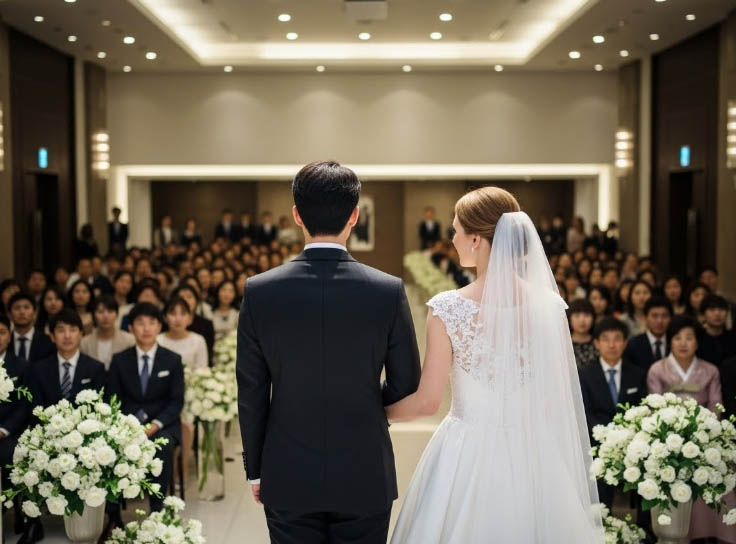
Your Complete Guide on How to Plan an International Wedding in Korea
Annyeonghaseyo, engaged couples! You’ve mastered the art of cross-cultural dating, navigated the F-6 visa paperwork, and now you’re ready for the main event: The Wedding.
Planning a wedding in Korea—especially one that blends Korean traditions with your home country’s customs—is exciting, but it comes with unique logistics and expectations. As your Korean insider, I’m here to give you the honest, witty, step-by-step guide on How to Plan an International Wedding in Korea. Let’s make sure your big day is magical, not manic.
1. The Legal vs. The Ceremony (Don’t Confuse the Two!)
First things first: In Korea, the marriage registration (the legal part) is completely separate from the wedding ceremony.
Legal Registration: This must happen first! The Korean spouse handles the registration at the local Gu or Si office (구청/시청) using notarized documents from the foreigner (Certificate of Eligibility, etc.). This makes you legally married. Your wedding ceremony is purely celebratory.
The Venue Hunt: Korean weddings are often held in massive, dedicated Wedding Halls (Weddings Cheong, 웨딩홀). These halls are designed for speed and efficiency, often hosting multiple weddings in one day.
Insider Tip: If you want a slower, more Western feel, look for hotel ballrooms, garden venues, or private event spaces. Wedding Halls are efficient but can feel rushed!
2. Navigating the Schedule (The Korean Speed Run)
If you choose a traditional Korean Wedding Hall, be prepared for a highly efficient, fast-paced event that is culturally rooted in practicality.
The 30-Minute Ceremony: Traditional hall ceremonies are lightning-fast—often 30 minutes from start to finish. They prioritize getting guests through the door quickly.
The Food Factory (Sikdae, 식대): The reception is usually a buffet or banquet served in a separate area. Guests often eat right after their arrival, sometimes even before the ceremony begins! This is practical, not rude.
The Money Gift (Cash is King): Korean guests don’t usually buy physical gifts. They bring cash in a white envelope (Chuk-ui-geum, 축의금) and write their name in a guest book at the entrance. This covers the cost of the guest’s meal and provides the couple with financial help for starting their new life.
3. Blending Cultures: Where to Compromise
A successful international wedding blends traditions respectfully.
Hanbok (한복): Incorporate the Hanbok! Many couples wear Western attire for the main ceremony and change into the vibrant, beautiful Hanbok for the reception, the photos, or the Pye-baek (폐백, the traditional family bowing ceremony).
The Pye-baek: If your Korean spouse’s family is traditional, schedule the Pye-baek. This is a private, post-ceremony event where the couple formally bows to the parents and elders. It’s a wonderful, intimate ceremony that honors the family hierarchy and offers great photo opportunities.
The Guest List: Be prepared for large numbers. Korean guest lists often include extended family, colleagues, and acquaintances to honor social obligation. Embrace the crowd—it means the whole community is celebrating your union!
4. The Vendor Hustle (The All-in-One Service)
Korean Wedding Halls often operate as a one-stop-shop, which is both convenient and restrictive.
The Package Deal: Halls typically include catering, flowers, photography, and sometimes even the dress and makeup. This saves you the headache of finding many vendors, but gives you less creative control.
Outside Vendors: If you want your own foreign photographer or a specialized foreign-style menu, confirm with the hall before booking if they allow outside vendors, as many do not.
The Photographer’s Focus: Korean wedding photography is highly focused on posed, clean, and classic shots. If you want a more photojournalistic, candid style common in the West, you should hire your own dedicated foreign photographer in addition to the hall’s staff.
Planning an international wedding in Korea requires patience, organization, and a willingness to understand the practical magic of the Korean system. It will be the most unique, beautiful, and efficient wedding you ever attend!